Wednesday... sounds really far away, with all the play going on, each day is an eternity. Let's try to remember. We went to i forgot where to see this dance of these people from israel doing some stuff and well..yeah. I thought it was great, in the sense that they got talent, but nevertheless i didn't like it that much. The lights were boring... the only interesting fact about them was the blue and red effect they gave on the floor. music was... play back...uhmm yeah... hmm. the dance was good. the set design was not. maybe it was. i didn't like it
I didn't quite understand the idea of their dance, maybe the second one, that they were gay and wanted the world to accept them or something like that? *cough cough* sounds to me like their were bullied alot *cough cough* well anyways, i almost fell asleep.. actually i did for about 10 minutes :) when there was no music. uuh 3 follow spots would had made it more interesting... or at least change the lights. but bleh... it was only dance, music and ... laughing strangely.
But well... moving on
the philosopher Nietzsche once talked about how the opposition of 2 things cause tragedy. And almost all plays i watch seem to have this factor of opposition in them. I think i am bored of this fact, it is too predictable. You see the same patters of events happen. There is a beginning, a plot, most of the time good and evil, and they clash... one wins. It gets boring.
Abstract stuff. no objective, no opposition. no final point. just and idea. A thought that can make the brain get shocked, realize something. A play doesn't have to have a beginning and a ending. Can it avoid the plot? i don't know. maybe. How can you show and idea on a stage? Well.. you make the actors act as ideas, not as characters. You give them personalities from the idea of the abstract thought you want to represent. Just like Pantomime. Pantomime in greek means "We can act anything" and so they did. they acted as feelings, they why can't we act as an abstract thought? You can give it the characteristic you want, but obviously you would have to give it certain things for people to understand what it is.
I wanted to do something like this for the one act play, act as abstract thoughts, and not as characters in a predictable plot. But i don't know if we 5 will want to do something like that... or even understand the idea i want to try to transmit. Maybe the audience won't be prepared for something like that, but who cares? You told me to make an audience for my plays, not a play for my audience right? :)
The idea could still have opposition, which is i think the most important element on a play, it causes the suspense, the interesting factor in the play, so the audience want to keep watching, it will shock them... it will be something their minds could had never predicted.
As Jorge Wagensberg said in his book "Si la naturaleza es la respuesta, ¿Cual era la pregunta?" an explanation of what causes the entertainment on a human mind in a couple of phrases sequenced like this:
"La mente se nutre de cambio. El aburrimiento es por desnutricion de cambio. Se puede nutrir la mente de cambio de dos modos: el modo tipo cine (inmovil en un entorno movil) o el modo tipo viaje (movil por un entorno inmovil"
What i get from this is that the entertainment of the mind comes from change, therefore, to make the audience entertained, we have to provide change, and one of the ways is to have opposition, which clash together. But when it's the same old story and you can predict it, then the change becomes less and less entertaining. But if you make something completely unpredictable, with a meaning but no beginning and end, then people won't be able to tell what comes next, and will have their minds filled with changes all the time. Abstract thoughts it what drives the human mind to progress, you have to imagine the future in order to make predictions or hypothesis of what will happen. If they don't turn out to be this way, the human brain will be forced to change its thought completely, and will have to work again everything, because it wasn't as he thought it would be. That, for me, is entertaining. Good examples could be El interruptor or Sin titulo. That's why i liked those plays. But i know it is not as easy as it sounds, it is a lot more complex that this, but i would love to try, because its something new, its a change. Extremes are never good, so i wonder, How much change can a human brain take in a short period of time? Is there a point where it just breaks down and turns into a complete nonsense? How can you know how much change is enough? How abstract can something be and still be understandable by the human mind?
Theatre seems a really interesting and useful way to find out more about the human mind. I found that fascinating.
domingo, 26 de junio de 2011

domingo, 19 de junio de 2011
Demons and reality
Daimon is the Greek derivative for the term demon. In this sense the term "demon" means "replete with knowledge."
the definition comes from http://www.pantheon.org/articles/d/daimon.html
"it wasn’t until the Roman period that the term came to be used exclusively for evil spirits."
"If there are evil spirits capable of inflicting physical and mental ailments on human beings, there arises a theological problem of how to explain them. If their actions occur with the permission or support of God, then it becomes difficult to square this with the idea of God as perfectly loving. If the actions of demons occur without the permission or support of God, this becomes difficult to reconcile with the idea that God is all-powerful."
Religion doesn't like the idea of demons from the greeks, they say, since around the XIII - XV centuries that demons are evil creatures, with the excuse that knowledge can only come from God, and therefore, demons' knowledge is not pure/good/right or whatever they said.
The idea of this blog is not to talk about demons, religion, god, or anything related to that, it is just a mere example of how the definition of something can change according to the people it is told to, and i wondered if this happened in theatre,
As roberto said, the human brain interprets signs and understands texts, where a text is a group of signs put together in what may be a sentence. So, this means that the word demon will be interpreted different by a religious person and by someone that knows it's real meaning, and therefore, understand something different. But that is how the human brain works, it does 5 main things, as carl sagan said:
1) recollect
2) inter-compare
3)synthesizes
4)analyzes
5)generates abstraction
And thus, each person will construct his own reality, by his perceptions and brain. Reality is nothing, and we make our own, as we give sense to the words as we interpret them.
In theatre, we interpret breathing much differently as we do in science, which makes it difficult to understand as well as i should... maybe if i weren't so addicted to physics and biased on how to breath it would be simpler, as it is said "Where ignorance is a bliss 'tis folly to be wise". But who to blame who is wise and who is not? Who dares to say that his reality is the truth? Wise, for me, is to build a reality in which you can understand many different realities, and therefore have a wider knowledge. But that is my reality, what is yours? why is mine right and not yours?
Same in theatre, you cannot say what kind of theatre is correct and which is the best. that is why we study different traditions, to have a wider knowledge of theatre (amirite?) and be able to build a more complex reality and meaning for plays. no tradition is right, no tradition is wrong. they just interpret differently. that is something i will have to keep in mind for paucartambo.
On stage, a director can construct his own reality, and share it with the audience, that is what i think, the most interesting part of theatre, the fact that you can give any opinion and idea of the reality you have built in your brain and make a play from it, there is no society that won't think as you, and won't let you enjoy of a world in which your reality is the one true reality, and it doesn't have to be face the fact there other people will see everything different. In your stage, everyone is living the same reality you built.
NOOOOOOOOOOOOOOO TERMINE EL BLOG Y ESTABA INCREIBLEEEE Y SE BORRO SDIJFLKDSF MALDITO INTERNET.. AHORA ESPERO RECORDAR, PORQUE TENIA IDEAS INCREIBLES AFLKS;FMDJKLFDSNKGBFHJKSDFLKHADSMF DHJKSGFLK;
resumire lo que habia puesto..
The people who go to see the play are living a different reality that what is on stage, and therefore they can interpret things different, and it is amazing when the barrier between stage and audience is broken, because for the moment in which the play is happening, the audience is living the same reality as the stage, the directors reality, but connected to their reality, and causes their brains, the factory of their reality to make changed and fix some things, making people think, and interpret, and try to understand, because this reality is different from their own. But this is why theatre gives knowledge, because as i said before, knowledge for me how wide you can differentiate different realities, and have a better view of your own.
But when making the play, is the director's reality the same as the actor's? they will both see the play different, but therefore everyone has a lot of general knowledge in common, so people won't be so disorganized.
As demons are something to greeks and something different to religion, the same works for theatre, what is something in everyday life, is not the same in theatre. Not even the reality, but how do people connect their reality to the play? neither reality is better, right, wrong, or bigger, there are just different, many people think that what is not their reality is not right. and that is the awsomeness in theatre, there is no right reality, just different perspectives, and i wide range of opinions of reality. Theatre is closely connected to knowledge, and i had a lot more cool stuff to say but it got deleted :(...
That is something i have to keep in mind when i go to see a play from now on: How did this play affected my reality? what was different from the stage reality and mine? how did it make me reflect about things?
"Where ignorance is bliss 'tis folly to be wise"
When i started writing this blog, i liked a lot this quote, but now i am in disagreement, because as i said before, the more you know, the better the reality you make, the better the connections, the better your understanding, the wider your knowledge. anyways reality is nothing more that what you perceive in your brain. How does it work? theatre seems to a good gateway for this understanding. Although i like a million times more the theory than the practice :)
Our realities can only get as closely as possible, and by understanding a wider range of them we can become more accurate on our perspective of reality, but never precise, because reality doesn't actually exists, it is created. How can reality be analyzes through a play? Is reality on stage supposed to be separated from every day life or to be connected? what is reality on stage apart from just a attempt to construct a reality within the reality of someone? How does the reality on theatre works?
I have a quote of myself, which goes like this: "There is 2 kinds of people in this world, the ones who make the lies, and the ones who live them". I personally like a lot my quote cause i know what it means, but it is not as clear as it could be, because the real meaning likes in this concept of reality. The ones who lie are the ones who make the reality for others, they tell them how reality should work, and make them think reality is 1, and the ones who live the lie are those who are living the built reality of this powerful men (governments, religions, social groups, etc... from here comes my hate to these, because i hate when people make the reality for others). But theatre, in the contrary, does not lie, but presents a reality to think about, to realise about these lies, to see that reality is different to what people think. At least this is how i think about it. This is my reality. What's yours? Do you make your own reality or do you live someone else's? Reality is nothing, we make it. How accurate and closely are connected different realities in different people's heads? How much can a play stretch or synthesize reality?
the definition comes from http://www.pantheon.org/articles/d/daimon.html
"it wasn’t until the Roman period that the term came to be used exclusively for evil spirits."
"If there are evil spirits capable of inflicting physical and mental ailments on human beings, there arises a theological problem of how to explain them. If their actions occur with the permission or support of God, then it becomes difficult to square this with the idea of God as perfectly loving. If the actions of demons occur without the permission or support of God, this becomes difficult to reconcile with the idea that God is all-powerful."
Religion doesn't like the idea of demons from the greeks, they say, since around the XIII - XV centuries that demons are evil creatures, with the excuse that knowledge can only come from God, and therefore, demons' knowledge is not pure/good/right or whatever they said.
The idea of this blog is not to talk about demons, religion, god, or anything related to that, it is just a mere example of how the definition of something can change according to the people it is told to, and i wondered if this happened in theatre,
As roberto said, the human brain interprets signs and understands texts, where a text is a group of signs put together in what may be a sentence. So, this means that the word demon will be interpreted different by a religious person and by someone that knows it's real meaning, and therefore, understand something different. But that is how the human brain works, it does 5 main things, as carl sagan said:
1) recollect
2) inter-compare
3)synthesizes
4)analyzes
5)generates abstraction
And thus, each person will construct his own reality, by his perceptions and brain. Reality is nothing, and we make our own, as we give sense to the words as we interpret them.
In theatre, we interpret breathing much differently as we do in science, which makes it difficult to understand as well as i should... maybe if i weren't so addicted to physics and biased on how to breath it would be simpler, as it is said "Where ignorance is a bliss 'tis folly to be wise". But who to blame who is wise and who is not? Who dares to say that his reality is the truth? Wise, for me, is to build a reality in which you can understand many different realities, and therefore have a wider knowledge. But that is my reality, what is yours? why is mine right and not yours?
Same in theatre, you cannot say what kind of theatre is correct and which is the best. that is why we study different traditions, to have a wider knowledge of theatre (amirite?) and be able to build a more complex reality and meaning for plays. no tradition is right, no tradition is wrong. they just interpret differently. that is something i will have to keep in mind for paucartambo.
On stage, a director can construct his own reality, and share it with the audience, that is what i think, the most interesting part of theatre, the fact that you can give any opinion and idea of the reality you have built in your brain and make a play from it, there is no society that won't think as you, and won't let you enjoy of a world in which your reality is the one true reality, and it doesn't have to be face the fact there other people will see everything different. In your stage, everyone is living the same reality you built.
NOOOOOOOOOOOOOOO TERMINE EL BLOG Y ESTABA INCREIBLEEEE Y SE BORRO SDIJFLKDSF MALDITO INTERNET.. AHORA ESPERO RECORDAR, PORQUE TENIA IDEAS INCREIBLES AFLKS;FMDJKLFDSNKGBFHJKSDFLKHADSMF DHJKSGFLK;
resumire lo que habia puesto..
The people who go to see the play are living a different reality that what is on stage, and therefore they can interpret things different, and it is amazing when the barrier between stage and audience is broken, because for the moment in which the play is happening, the audience is living the same reality as the stage, the directors reality, but connected to their reality, and causes their brains, the factory of their reality to make changed and fix some things, making people think, and interpret, and try to understand, because this reality is different from their own. But this is why theatre gives knowledge, because as i said before, knowledge for me how wide you can differentiate different realities, and have a better view of your own.
But when making the play, is the director's reality the same as the actor's? they will both see the play different, but therefore everyone has a lot of general knowledge in common, so people won't be so disorganized.
As demons are something to greeks and something different to religion, the same works for theatre, what is something in everyday life, is not the same in theatre. Not even the reality, but how do people connect their reality to the play? neither reality is better, right, wrong, or bigger, there are just different, many people think that what is not their reality is not right. and that is the awsomeness in theatre, there is no right reality, just different perspectives, and i wide range of opinions of reality. Theatre is closely connected to knowledge, and i had a lot more cool stuff to say but it got deleted :(...
That is something i have to keep in mind when i go to see a play from now on: How did this play affected my reality? what was different from the stage reality and mine? how did it make me reflect about things?
"Where ignorance is bliss 'tis folly to be wise"
When i started writing this blog, i liked a lot this quote, but now i am in disagreement, because as i said before, the more you know, the better the reality you make, the better the connections, the better your understanding, the wider your knowledge. anyways reality is nothing more that what you perceive in your brain. How does it work? theatre seems to a good gateway for this understanding. Although i like a million times more the theory than the practice :)
Our realities can only get as closely as possible, and by understanding a wider range of them we can become more accurate on our perspective of reality, but never precise, because reality doesn't actually exists, it is created. How can reality be analyzes through a play? Is reality on stage supposed to be separated from every day life or to be connected? what is reality on stage apart from just a attempt to construct a reality within the reality of someone? How does the reality on theatre works?
I have a quote of myself, which goes like this: "There is 2 kinds of people in this world, the ones who make the lies, and the ones who live them". I personally like a lot my quote cause i know what it means, but it is not as clear as it could be, because the real meaning likes in this concept of reality. The ones who lie are the ones who make the reality for others, they tell them how reality should work, and make them think reality is 1, and the ones who live the lie are those who are living the built reality of this powerful men (governments, religions, social groups, etc... from here comes my hate to these, because i hate when people make the reality for others). But theatre, in the contrary, does not lie, but presents a reality to think about, to realise about these lies, to see that reality is different to what people think. At least this is how i think about it. This is my reality. What's yours? Do you make your own reality or do you live someone else's? Reality is nothing, we make it. How accurate and closely are connected different realities in different people's heads? How much can a play stretch or synthesize reality?
domingo, 12 de junio de 2011
1 play that tells 2 stories
My brain is having an explosion of ideas.
there, i did a metaphore.
Sinecdoches and metonymy are confusing, but i will give it a try:
Sinecdoche: He didn't answer when i called his house (when i really mean the phone of the house)
Metonym: Turn of the light (actually.. you turn of the lamp/lightbulb)
I have been having a hard type differentiating both, but now that i got a better picture of how they work (...thanks to the examples of wikipedia...) i will try to see how they are used in plays.
Let's say you have an abstract play, in where all you see is not what you are supposed to see. everything has a different meaning. The director will use the metaphore, the sinecdoche and metonym to express everything. Now let's set a theme to the play....hmmm.. lets say ignorance. human and social ignorance. now the director will show things on stage that people reckon are true, but are really not true. I don't know if i make myself clear, but the point is that this play is filled with false images, which represent the truth.
Ok... so getting to the set design of the play, we could have things for example we could have a house representing a country. saying that the country is home. or maybe a bottle a carton of cigarretes can represent cancer. The point is that things are not what they actually are, they are things that represent, through this 3 literary images, something else.
In this play, we should have a plot. Let's say the plot is the conflict between 2 countries, for instance USA and Russia during the cold war. The SR-71 blackbirds (spy planes which could reach a speed of mach 5) could be represented by a pilot, and this would be a metonym, or a turbine can be on stage, representing the SR-71 by a sinecdoche. or maybe a blackbird, literally, to represent it. The point is to represent the SR-71 or the SR-91 (Aurora... which came after the SR-71 and could reach speeds of up to mach 8, but it's existent is not confirmed) using something else, connecting by these literary images.
Many UFOs were "spotted" during this time. Not really UFOs but spy balloons of the USAF which were actually being used to spy on USSR technology, but civilians claimed to be aliens which the government knew of and were hiding from them. So in the play, this balloons could be actually be UFO. to say that these WERE UFOs, there you got a metaphore on stage, but from a weird perspective.
By this method, you can recreate a new perspective of the cold war on stage using this set design tricks, and you get an abstract play representing all of these things. But as you see, things have to be familiar to all audiences, so people can, after a little thinking, figure out what the director really meant. But what if the director wanted to put something on stage that was only in his mind? for example what if the director sees these technology biased, and represents them in an unusual way to people, is it still right? If you want to represent something completely different out of something, is it right? this sounds like freedom of speech, so i guess it is, but there may be different way to interpret something if you play with these images and make it confusing.
i.e. representing the SR-71 as a demon, a flying demon.
Some people in the USSR may be in agreement, but north americans won't.
These brings me to the question: if you are representing things as they are not, and people will interpret them different... can you make a play which will be seen completely different from 2 different perspectives?
What do i mean by this? I mean that the north americans will see a different story and different meaning to the play that the russians will, giving 2 different stories, with different endings. Maybe pleasing for both? but everything should be perfectly made to represent 2 things that make sense at the same time. Is it possible? Is it possible to make 2 plays in 1, using metaphors, sinecdoches and metonyms? 1 play that tells 2 stories.
SR-71 (Blackbird)
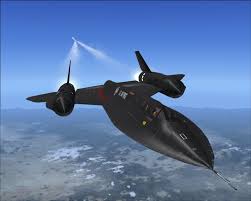
SR-91 (Aurora)

IN SOVIET RUSSIA, SONIC BOOM CAUSES DOPPLER EFFECT
there, i did a metaphore.
Sinecdoches and metonymy are confusing, but i will give it a try:
Sinecdoche: He didn't answer when i called his house (when i really mean the phone of the house)
Metonym: Turn of the light (actually.. you turn of the lamp/lightbulb)
I have been having a hard type differentiating both, but now that i got a better picture of how they work (...thanks to the examples of wikipedia...) i will try to see how they are used in plays.
Let's say you have an abstract play, in where all you see is not what you are supposed to see. everything has a different meaning. The director will use the metaphore, the sinecdoche and metonym to express everything. Now let's set a theme to the play....hmmm.. lets say ignorance. human and social ignorance. now the director will show things on stage that people reckon are true, but are really not true. I don't know if i make myself clear, but the point is that this play is filled with false images, which represent the truth.
Ok... so getting to the set design of the play, we could have things for example we could have a house representing a country. saying that the country is home. or maybe a bottle a carton of cigarretes can represent cancer. The point is that things are not what they actually are, they are things that represent, through this 3 literary images, something else.
In this play, we should have a plot. Let's say the plot is the conflict between 2 countries, for instance USA and Russia during the cold war. The SR-71 blackbirds (spy planes which could reach a speed of mach 5) could be represented by a pilot, and this would be a metonym, or a turbine can be on stage, representing the SR-71 by a sinecdoche. or maybe a blackbird, literally, to represent it. The point is to represent the SR-71 or the SR-91 (Aurora... which came after the SR-71 and could reach speeds of up to mach 8, but it's existent is not confirmed) using something else, connecting by these literary images.
Many UFOs were "spotted" during this time. Not really UFOs but spy balloons of the USAF which were actually being used to spy on USSR technology, but civilians claimed to be aliens which the government knew of and were hiding from them. So in the play, this balloons could be actually be UFO. to say that these WERE UFOs, there you got a metaphore on stage, but from a weird perspective.
By this method, you can recreate a new perspective of the cold war on stage using this set design tricks, and you get an abstract play representing all of these things. But as you see, things have to be familiar to all audiences, so people can, after a little thinking, figure out what the director really meant. But what if the director wanted to put something on stage that was only in his mind? for example what if the director sees these technology biased, and represents them in an unusual way to people, is it still right? If you want to represent something completely different out of something, is it right? this sounds like freedom of speech, so i guess it is, but there may be different way to interpret something if you play with these images and make it confusing.
i.e. representing the SR-71 as a demon, a flying demon.
Some people in the USSR may be in agreement, but north americans won't.
These brings me to the question: if you are representing things as they are not, and people will interpret them different... can you make a play which will be seen completely different from 2 different perspectives?
What do i mean by this? I mean that the north americans will see a different story and different meaning to the play that the russians will, giving 2 different stories, with different endings. Maybe pleasing for both? but everything should be perfectly made to represent 2 things that make sense at the same time. Is it possible? Is it possible to make 2 plays in 1, using metaphors, sinecdoches and metonyms? 1 play that tells 2 stories.
SR-71 (Blackbird)
SR-91 (Aurora)
IN SOVIET RUSSIA, SONIC BOOM CAUSES DOPPLER EFFECT
domingo, 5 de junio de 2011

Moods a la craig is an interesting idea. His innovation consists on changing the mood of the stage by only changing the lights and the position of the actor. We tried this for ourselves, we had to get ourselves a model, a space and the lights we needed.
After doing the project and presenting it to the class, we discussed some points about the idea of craig, and then i wondered to myself, what if the director tries to transmit a feeling with the lights, but the audience receives a totally different feeling, and makes a wrong interpretation? So i began to search for an answer to my new question.
It didn't took me so long to get to the conclusion of keeping it simple. If you make the changes to complicated, then you may, and most probably, confuse the audience, therefore, you should keep it simple for the audience to catch up quick and continue to enjoy the play. If there get a mistaken interpretation, then they wont understand as well as they would.
But then, some people, the usual intelligent stereotype person who wants to appreciate the work of the director, won't be very amazed by mediocre changes. This contrast of audiences will result on a problem, o the director has to make sure that his play is adaptable and enjoyable for everyone. But, how do you make an amazing mood change with lights while keeping it simple to understand? It is not easy to make mood changes like this, so great and complex but easy to catch up to, and i wonder: Is there a way to know exactly what the people will think? Is the point of this changes to cause different feelings on different people? Maybe it is a way to let each person have their own interpretation, and thus having a more adaptable mood, but in that case, how do you know what to do in the play for it to match to the audience's interpretation?
Suscribirse a:
Entradas (Atom)